What Ingredients Are in SynoGut? Six on the Bottle, Four More Online
Written by the Synogut editorial team · Medically reviewed by Dr. Will Bulsiewicz, MD, Physician
Last updated · Review date: October 16, 2026 · Who reviewed this page · How we write and review
The Synogut bottle art names six ingredients: psyllium, bentonite clay, black walnut, oat, flaxseed and prune. A web page from the brand adds four more. No amount is published for any of them. The label on the bottle in your hands is the list that counts, so read it first.
Key facts
- Six ingredients show on the bottle art: psyllium, bentonite clay, black walnut, oat, flaxseed and prune.
- The brand’s info site text names ten. The extra four are aloe vera, L. acidophilus, apple pectin and glucomannan.
- No amount is published for any ingredient, and no Supplement Facts panel was supplied to us.
- Three of the six are fibers (psyllium, oat, flaxseed). One is a clay and one is a walnut hull.
- Two capsules likely hold about 1 to 2 grams of everything combined. That is our estimate from capsule size.
- The form is a capsule. The maker and the other ingredients are not published.
What ingredients are in SynoGut capsules?
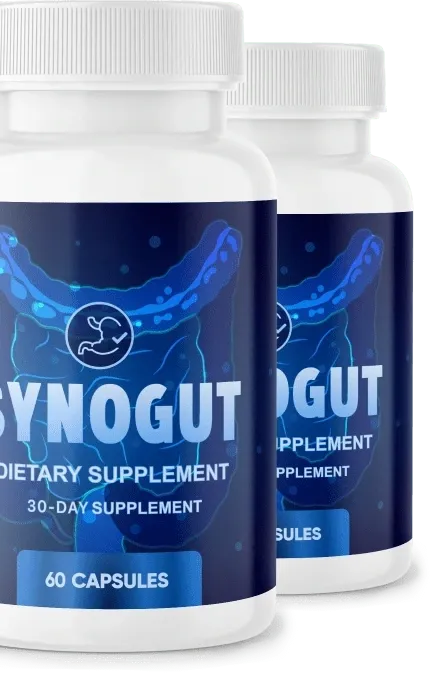
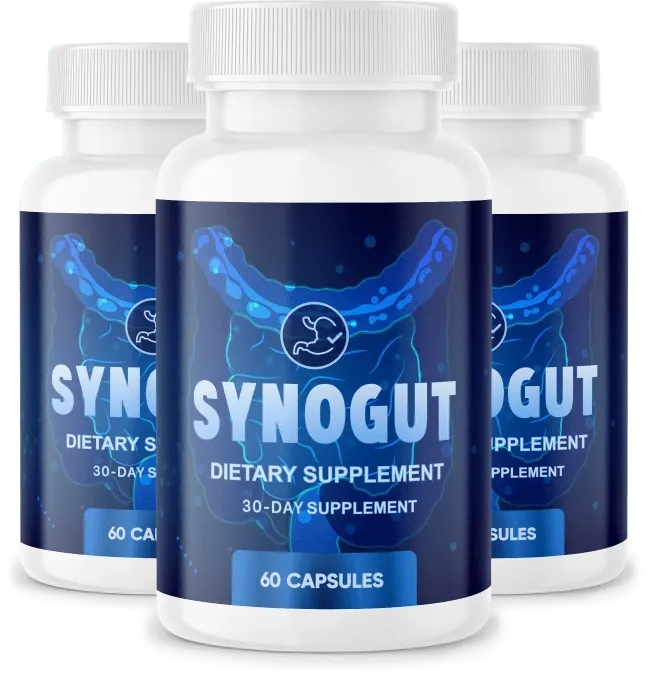
Start with the part that is clear. The picture of the bottle and the seller’s own graphic show six named ingredients. They are plant parts, a plant fiber and a mineral clay. Nothing on those images gives a weight, a percent or a serving.
| Ingredient | What it is | Amount on label | What studies used |
|---|---|---|---|
| Psyllium | Plantago husk, a gel-forming soluble fiber | Not stated | About 10-19 g a day |
| Bentonite clay | A volcanic clay that binds water and other substances | Not stated | No established dose |
| Black walnut | Usually the hull; rich in tannins | Not stated | No established dose |
| Oat | Oat fiber, which carries beta-glucan | Not stated | 3 g of beta-glucan a day is a heart-claim figure |
| Flaxseed | Seed with fiber and plant oils | Not stated | About 10 g a day in one small trial |
| Prune | Dried plum with fiber and sorbitol | Not stated | 80-120 g of whole prunes a day |
Read the last column with care. Those are the amounts people ate or took in studies. They are not what is in a Synogut capsule. The gap between the two columns is the main thing to understand about this product.
Why do SynoGut ingredient lists differ from site to site?
You may have seen a longer list. That is real, and it comes from a different source. The brand’s info site gives its ingredient text in a long sales letter. That text names ten ingredients. The bottle art, which is what the seller pack shows, names six.
| Source | Count | What it names |
|---|---|---|
| Bottle art and the seller’s inside graphic | 6 | Psyllium, bentonite clay, black walnut, oat, flaxseed, prune |
| Brand info site text | 10 | The six, plus aloe vera, L. acidophilus, apple pectin, glucomannan |
| A paid press release | Not a full list | Mentions lycopene |
| A third-party seller’s review | Not verified | Describes an Amazon product with a probiotic first |
We use the six-name list on this page. It matches the bottle art and the seller’s own graphic, and the graphic shows six photo tiles with no numbers. We treat the longer list as unconfirmed sales copy until a printed label shows it.
The press release and the marketplace review are the weakest items in the table. One is a paid placement. The other we could not verify, and it may describe a different product that shares the name. A name on its own proves nothing.
What do the fibers in SynoGut do?
Three of the six are fibers. They are psyllium, oat and flaxseed. Fiber is the part of plants your body does not digest. It holds water and adds bulk.
Psyllium
Psyllium is the best-studied of the three. It forms a gel when it meets water. A 2023 guideline from two U.S. gut medicine groups backs fiber for chronic constipation, and psyllium was the one fiber that clearly helped. The trials behind that used about 10 to 19 grams a day.
Oat
Oat fiber carries beta-glucan. FDA has a food rule that lets a heart-health claim ride on 3 grams a day of beta-glucan from whole oats or barley. Synogut makes no heart claim, and the oat amount is not stated, so that figure is background only.
Flaxseed
Flaxseed adds fiber and plant oils. One small 12-week trial used about 10 grams a day, baked into cookies, in adults with type 2 diabetes who had constipation. It is a single trial, and the food form is far from a capsule powder.
Notice that every dose above is measured in grams. A large size 00 capsule holds under 1 gram of a dense powder. That is why two capsules likely hold only about 1 to 2 grams of all six ingredients put together.
What should you know about the bentonite clay and black walnut?
These two have the thinnest support. Bentonite clay is a volcanic mineral that binds water and other things. Black walnut hull is rich in tannins. Neither has an established dose for digestion.
- Clay: RxList rates oral use over a long stretch as possibly unsafe, and notes it may lower iron and potassium.
- Clay: FDA warned in 2016 about lead in one clay powder sold for drinking. That warning was about a different product, not Synogut.
- Clay: no heavy-metal test of Synogut has been published.
- Black walnut: evidence is too thin to rate it for gut worms or digestion.
- Both can bind other things in the gut, so medicines may be absorbed less well.
For a longer look at the lead question, read our clay article.
Why is prune in a SynoGut capsule?
Dried plums carry two helpful things for regularity: fiber and sorbitol, a natural sugar alcohol. Whole prunes are an old kitchen answer to a slow gut.
The research is on the whole fruit. A 4-week trial gave 120 adults 80 or 120 grams of prunes a day. Stool weight went up compared with water, and gas was more common too. A smaller trial, funded by the California Dried Plum Board, compared prunes and psyllium at about 6 grams of fiber a day, with prunes doing a little better.
A capsule can hold only a pinch of prune powder. It is fair to say prune is on the label. It is not fair to borrow the trial results for it.
Does SynoGut contain probiotics, aloe vera, pectin or glucomannan?
According to the bottle art, no. These four appear only in the info site’s text. If the label on your bottle does list them, here is a short note on each.
| Ingredient | On the bottle art? | What to know |
|---|---|---|
| Aloe vera | No | Aloe latex was taken out of over-the-counter laxatives in 2002, and oral latex can cause cramps and diarrhea |
| L. acidophilus | No | No strain or CFU count is given, and probiotic effects depend on both |
| Apple pectin | No | Pectin was one of the fibers that helped in a review, at doses above 10 g a day |
| Glucomannan | No | A swelling fiber; drug labels for it must carry a choking warning |
We take a closer look at the probiotic question in our post on whether Synogut is a probiotic.
How do you check the ingredients on your own bottle?
Your bottle outranks every web page, including this one. The check takes about two minutes.
- 1
Find the panel
Look on the back or side of the bottle for a boxed Supplement Facts panel.
- 2
Match the names
Compare each name with the six in the table near the top.
- 3
Look for amounts
Each ingredient needs its own amount, or a blend needs a total weight.
- 4
Spot surprises
Note any probiotic, aloe or glucomannan line.
- 5
Ask before you start
Questions about the formula go to the order desk at +1 (302) 200-3480.
If the bottle looks different from the seller’s pictures, do not take the capsules yet. Our batch verify page shows what to compare.
Frequently asked questions
Short answers to the questions people ask most.
What ingredients are in SynoGut?
The bottle art names six: psyllium, bentonite clay, black walnut, oat, flaxseed and prune. No amounts are published. The brand’s info site text adds four more.
How much psyllium is in SynoGut?
The amount is not published. Psyllium trials used about 10 to 19 grams a day, while two capsules likely hold about 1 to 2 grams of all six ingredients combined.
Does SynoGut contain aloe vera or glucomannan?
Not on the bottle art. Both appear only in the info site’s text, so check the label on the bottle you receive.
Is bentonite clay safe to take by mouth?
Long-term oral use is rated possibly unsafe, and clay may bind medicines. FDA warned about lead in one clay product. Ask your doctor or pharmacist first.
Why do two SynoGut ingredient lists exist?
The bottle art shows six and the info site’s text shows ten. No published label settles which one is current, so trust the label on your bottle.
Is SynoGut gluten free or vegetarian?
We cannot confirm either. Oats are often cross-contaminated with gluten, and the capsule shell is not published. Ask the order desk before you buy.
Our view
Our view: the six names on the bottle art are a fair starting point, but names are not doses. Three real fibers, a clay, a walnut hull and a fruit make a plain plant formula. What is missing is every amount, and that missing column is the main reason to stay modest in your hopes.
If you take daily medicines, have a bowel condition or are pregnant or nursing, ask a doctor or pharmacist about the clay and the fibers before you start. Do the two-minute bottle check when your parcel arrives. This page is general information, not medical advice.
Last updated November 4, 2026.