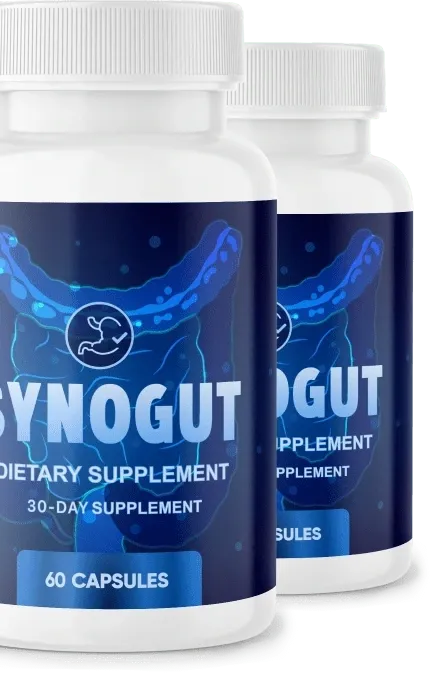
Gut-Health Supplement Ads: Bonus E-Books, Fake Reviews and Other Red Flags
Written by the Synogut editorial team
Last updated · Who reviewed this page · How we write and review
Check what the ad leaves out: a Supplement Facts panel, a named maker and written refund terms. Bonus e-book promises are not label claims. Paid press releases are ads. Since October 21, 2024, an FTC rule bans fake and bought reviews. “FDA approved” supplements do not exist. A 6-bottle bundle can outlast a 60-day refund window.
How can you tell if a gut-health supplement ad is a scam?
Start with what the ad leaves out. An honest product shows its Supplement Facts panel, names its maker and puts its refund terms in writing.
Gut products draw a lot of hype, because bloating and irregularity are common and hard to measure. The FTC says health claims generally need good human clinical trials, and the product sold should match the dose and form those studies used (FTC, 2022).
Run this test on any gut-supplement ad: 0 of 6 checked
Why do gut supplements come with free bonus e-books?
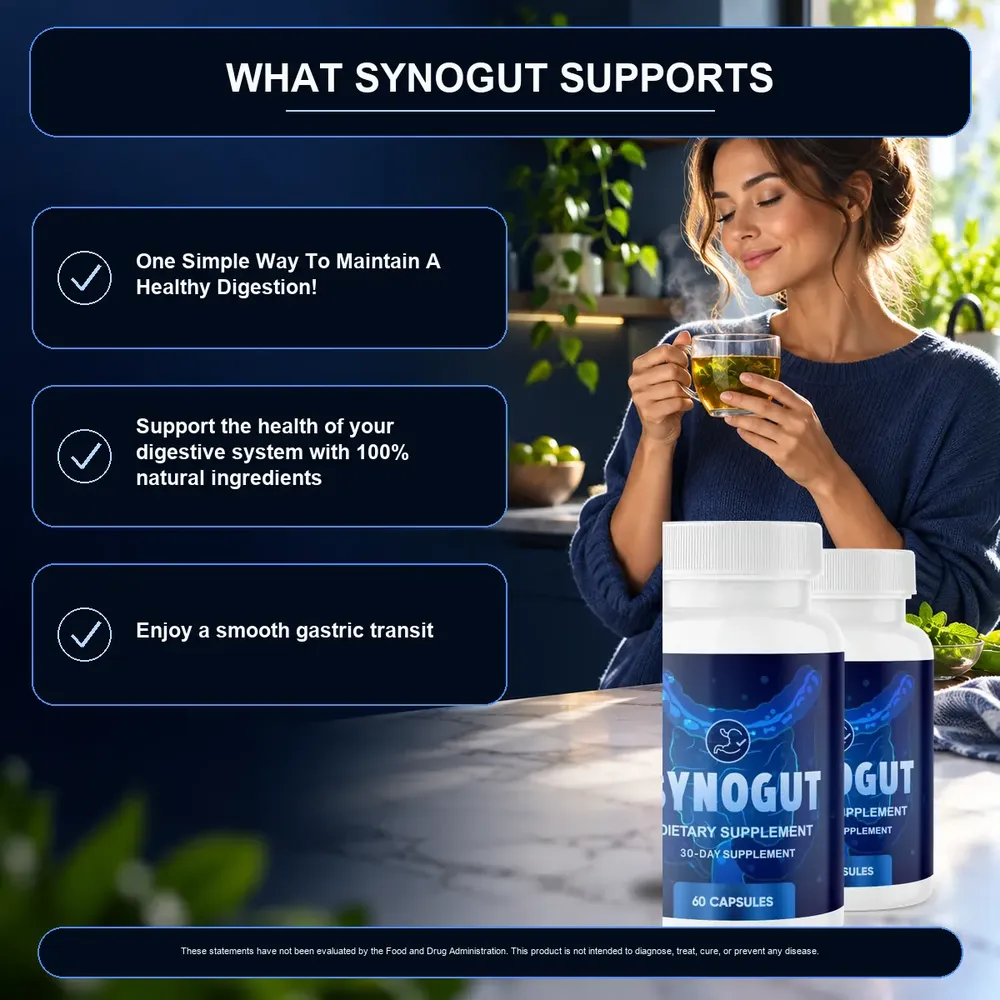
Bonuses make an order feel bigger without cutting the price. They also let an ad hint at results the product label could never claim.
The Synogut sales page offers three free e-books with an order. Their titles promise blood-pressure habits, gut-soothing treats and weight-loss hacks.
None of those promises is a label claim, and we have not reviewed the books. Read them as extras, not as health advice.
Label claims follow a rule. A claim like “supports digestive health” is not pre-approved by FDA, and the company must have proof it is true and print a disclaimer (FDA, 2024). A bonus book title skips that step entirely.
Are supplement press releases and review PDFs paid ads?
Most are. A newswire release is usually bought and written by the seller or its marketers, so it is an ad dressed as news.
For Synogut, we found paid newswire releases from 2025 that quote prices different from the current sales page. That alone tells you they are not tracking the real offer.
What we found for Synogut on October 13, 2026
- Many look-alike “Synogut reviews” PDFs posted on unrelated university and forum sites
- No FTC or FDA action against the product
- No BBB, Trustpilot or Reddit page
- No confirmed Amazon or Walmart listing
We do not link to any of these pages. A PDF stuffed onto a college server to rank in search is not a review, and a paid release is not a news story.
Is it illegal to post fake supplement reviews?
Yes, for businesses selling in the U.S. An FTC rule in force since October 21, 2024 bans fake reviews and testimonials, buying reviews, and reviews by insiders who hide their ties.
The same rule bans company-run websites that pose as independent review sites (FTC, 2024). That matters in this market, where many “review” pages end in a single checkout link.
The seller pack sent to us for Synogut included sample reviews, star scores, order counts and a named doctor. We use none of them, because none could be checked. The Synogut reviews page shows marked blanks until a review is matched to a real order.
Which gut-supplement ad claims are red flags?
The biggest red flags are claims no supplement is allowed to make, and pressure that rushes your decision. Here is what we saw on the info site that tells the long Synogut sales story, and what each item means.
| What the ad shows | Why it is a red flag | What to look for instead |
|---|---|---|
| “FDA approved and GMP certified facility” | FDA does not approve supplements or factories | “Made in an FDA-registered facility”, explained |
| “Run out of stock soon” | Scarcity wording pushes a fast decision | A plain price list you can come back to |
| A long story told by a narrator | A persona is not a named, licensed expert | A reviewer you can look up |
| A reference page of consumer articles | None of them tests the product | Studies with doses that match the label |
| No Supplement Facts or serving directions | You cannot check any amount | A full panel with every amount |
| The FAQ calls it “SynoGut Pro” | The product name is not even consistent | One name, one label, one ingredient list |
Detox talk deserves its own warning. NCCIH says there is little good research showing cleanse products remove toxins, and the FTC and FDA have acted against false cleanse claims (NCCIH, 2025).
What does “FDA registered” really mean on a supplement?
It means a factory registered with FDA. It does not mean FDA looked at the product, tested it or approved it.
FDA does not approve dietary supplements or their labels before they are sold (FDA, 2022). FDA also says it does not issue registration certificates and does not recognize ones sold by private businesses (FDA, 2024).
Our Synogut testing and quality page lists what has and has not been shown, including the lab report that is still missing.
Are “doctor formulated” claims regulated?
A doctor’s name on an ad does not prove anything by itself. What counts is good evidence for the claim, and a licensed person you can look up.
Check three things before you trust a doctor claim. Is the person named? Does a public license lookup match? Does the page say what that person reviewed?
- The name matches a license in a public state lookup
- The doctor’s field fits the topic, such as digestion or pharmacy
- Any payment from the seller is disclosed
- The claim still points to studies, not just a white coat
The Synogut info site names no doctor at all. Our own medical review slot stays blank until a real reviewer is confirmed, and our medical reviewer section explains why.
Why do supplement sites push 6-bottle bundles?
The biggest pack has the lowest price per bottle, so it looks like the obvious deal. It also brings the largest bill and a supply that runs well past the refund window.
On October 13, 2026, the Synogut sales page listed 6 bottles at $49 each, or $294. The 3-bottle pack was $69 each, or $207, and the 2-bottle pack $79 each, or $158, plus a $9.99 shipping tag.
The brand’s refund page asks for all bottles and the packing slip back, and the buyer pays return shipping. If you are trying a product for the first time, a smaller pack limits what you have at stake. The Synogut guarantee page sets out the full terms.
How do you report a misleading supplement ad?
Report false ads to the FTC and health problems to FDA. Save your proof first, because ad pages change or vanish fast.
- 1
Save the evidence
Take screenshots, copy the web address and note the date you saw it.
- 2
Put your health first
If you had a reaction, stop the product and call your doctor.
- 3
Tell FDA
Report side effects or a product you think is unsafe.
- 4
Tell the FTC
Report fake reviews, paid releases posing as news and false health claims.
- 5
Ask the seller for a refund
Call with your order ID and follow the written return steps.
Keep one more point in mind. Natural does not always mean safe, and your doctor should know every supplement you take (NCCIH, 2019).
If Synogut still interests you, judge it by the facts you can check. The Synogut pricing page lists each pack, its price and the shipping notes, and our post on bentonite clay in gut supplements covers one ingredient worth asking about.
Gut-supplement ad red flags: common questions
Questions people type into Google and Bing, answered from the label and the sources on this page.
How can you tell if a supplement is a scam?
Look for what is missing. A Supplement Facts panel with amounts, a named maker, written refund terms and real reviews should all be there. Countdown pressure, cure promises and “FDA approved” wording are warning signs.
Are supplement press releases paid ads?
Many are. Companies or their marketers pay newswire services to publish them, so they are ads in news clothing. The paid releases we found for this product even quoted prices that differ from the sales page.
Is it illegal to post fake reviews?
Yes, for businesses in the U.S. Since October 21, 2024, an FTC rule bans fake reviews and testimonials, buying reviews, hidden insider reviews and company-run sites posing as independent review sites.
Why do supplements come with free e-books?
Bonuses make an order feel bigger without lowering the price. The e-book promises are not label claims, so nobody has had to back them up. Treat them as extras, not as health advice.
What does “FDA registered” really mean on a supplement?
It describes a factory that has registered with FDA, not a product FDA has checked. FDA does not approve supplements before sale and does not issue registration certificates.
Are “doctor formulated” claims regulated?
A doctor’s name is not proof. FDA does not approve supplements, and the FTC expects health claims to rest on good human studies. If the ad names no licensed doctor you can look up, the claim tells you nothing.
Why do supplement sites push 6-bottle bundles?
The 6-bottle pack has the lowest price per bottle, so it looks like the smart buy. It also means the largest bill up front and a 180-day supply, far past a 60-day refund window.
How do I report a misleading supplement ad?
Save screenshots and the web address, then report the ad to the FTC. If a product made you sick, stop taking it, call your doctor and report the problem to FDA.