Does SynoGut Help With Leaky Gut, Inflammation or Gut Flora Balance?
Written by the Synogut editorial team · Medically reviewed by Dr. Will Bulsiewicz, MD, Physician
Last updated · Review date: October 16, 2026 · Who reviewed this page · How we write and review
No. SynoGut makes no leaky gut, inflammation or gut flora claim, and no study we cite measured any of them. Its claims are about everyday digestion. The research on its fibers covers constipation and stool output. Ask a doctor about gut symptoms that persist, and do not treat a supplement as a cure.
Key facts
- The label material we hold names no leaky gut, inflammation or flora claim.
- The sales claims are about healthy digestion, digestive system health and a smooth gastric transit.
- The research we cite on fiber, prunes and flaxseed looks at constipation and stool output, not inflammation.
- The bottle art lists no probiotic, and the info site names L. acidophilus without a strain or CFU count.
- Not published: any study of the finished formula, any ingredient amount and any lab report.
- SynoGut is not a treatment for any bowel disease, and FDA approves no supplement.
Does SynoGut really work for leaky gut or inflammation?
The sources give no reason to say yes. The seller does not claim it. The research we cite does not test it. So any page that says SynoGut calms inflammation or repairs a leaky gut is going past the facts.
This matters because these phrases are popular search terms. People type does SynoGut really work for inflammation, or for leaky gut, hoping for a straight answer. The straight answer is a plain one. Nothing we hold shows it, and the label does not promise it.
What does SynoGut actually claim about the gut?
Four short lines make up the claims. Not one mentions inflammation, the gut lining or flora.
| Topic people search | On the SynoGut material? | What the sources say |
|---|---|---|
| Leaky gut | No claim | No cited study covers it |
| Inflammation | No claim | No cited study covers it |
| Gut flora balance | No claim | No probiotic strain or CFU count is given |
| Healthy digestion | Yes, as a general aim | Fiber research looks at stool habits |
| Smooth gastric transit | Yes, as a general aim | Fiber and prune trials measured stool output |
| Detox or cleanse | No claim | Little good research shows detox products work |
The table shows the pattern. Where the label is silent, the research we cite is silent too. We would rather leave a space than fill it with a guess.
What does the fiber research actually measure?
It measures bowel habits. The 2022 review of 16 trials counted how adults with chronic constipation responded to fiber supplements (van der Schoot et al., 2022). The 2016 review looked at stool frequency and softness (Christodoulides et al., 2016). Prune trials weighed stool and timed transit (Lever et al., 2019).
None of those papers is about inflammation or the gut lining. To stretch them that far would be bad reading. Fiber research tells you something about regularity, at gram-sized doses. It tells you nothing about leaky gut.
The 2023 U.S. guideline is also about chronic constipation (Chang et al., 2023). It does not set a fiber dose, and it does not cover the gut lining.
Does SynoGut contain probiotics for gut flora balance?
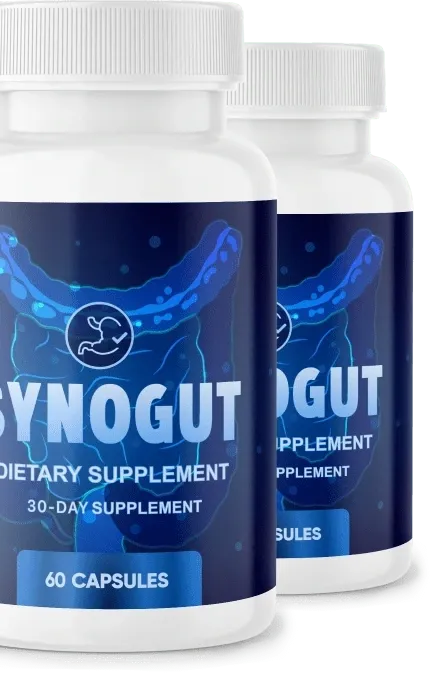
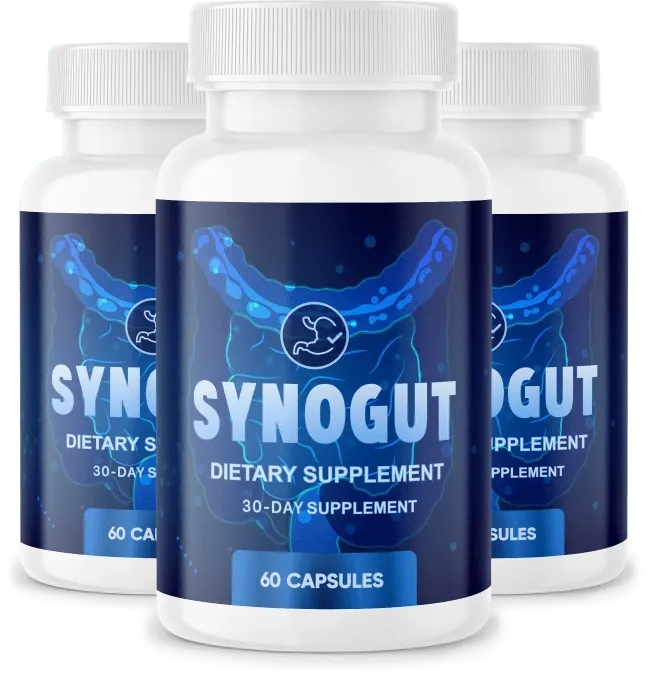
Not on the bottle art. The six names printed there are psyllium, bentonite clay, black walnut, oat, flaxseed and prune. The info site's longer text adds L. acidophilus, but no strain and no CFU count is given.
That omission matters. Probiotic effects depend on the exact strain and the dose, and the best choices for most gut problems are still unclear (NCCIH, 2019 (probiotics)). A line that names a microbe but gives no count is hard to judge.
One third-party seller described an Amazon product named Synogut that leads with a probiotic. We could not verify it. The point for you is simple: read your own bottle, and do not assume it holds a probiotic.
What should you do about gut symptoms that will not settle?
See a doctor. A supplement is a poor tool for a symptom that has no diagnosis. Blood in the stool, black stool, constant belly pain, vomiting, fever or weight loss without trying all need a visit (NIDDK, 2018 (symptoms)). A habit change that lasts for weeks counts as well.
Adults aged 45 to 75 should also have colorectal cancer screening, however regular they feel (USPSTF, 2021). Good bowel habits do not replace a screening test.
- Write down what you notice, and for how long.
- Bring your supplement bottles to the appointment.
- Ask whether any medicine or food could be the cause.
- Hold off on new supplements until a doctor has looked.
Why do gut-health claims travel so far from the label?
Search results blur the line. A page ranks for leaky gut because people search for it, then borrows a product name to match. The product itself may never have made the claim. That is how SynoGut ends up next to words it does not use.
The FTC expects health claims to rest on good human trials that match the product and the dose (FTC, 2022). A claim about inflammation would need that kind of proof. We hold none for SynoGut, so we do not repeat the claim.
- Check the bottle first. If a word is not there, be careful with a page that uses it.
- Ask what study the page cites, and whether it tested this product.
- Look for a named author and a named reviewer.
- Be wary of pages that promise a result and give no timeline.
Our guide to red flags in gut-supplement ads goes through more warning signs.
What is a fair way to use SynoGut, if you use it?
Use it as a small daily habit for general digestive support, not as a response to a diagnosis. Take the label serving with a full glass of water, keep it apart from medicines and keep notes.
Check three safety points first. Psyllium swells, so it needs at least 8 oz of fluid (21 CFR 201.319). Clay and walnut tannins may bind medicines. FDA once found high lead in one clay powder, and no heavy-metal test for this capsule is published (FDA, 2016).
What are the price and guarantee facts for the curious?
| Item | What is published |
|---|---|
| Bottle | 60 capsules, labeled 30-Day Supplement |
| Ingredient amounts | Not published |
| 2, 3 or 6 bottles | $79, $69 or $49 a bottle |
| Guarantee | 60 days; the buyer pays tracked return shipping |
| Claim by phone | +1 (302) 200-3480 with the order ID |
The guarantee protects your wallet. It is no evidence that a product treats any gut condition.
Frequently asked questions
These are the gut-health questions we get most. The answers stay inside what the sources support.
Does SynoGut really work for leaky gut?
SynoGut makes no leaky gut claim, and no study we cite tested it. Ask a doctor about gut symptoms that persist.
Does SynoGut really work for inflammation?
No inflammation claim appears on the label material, and the fiber research we cite does not measure inflammation.
Can SynoGut balance gut flora?
The bottle art lists no probiotic. The info site names L. acidophilus without a strain or CFU count, so no flora claim can be judged.
Does SynoGut work for digestive issues?
It is sold for everyday digestive support only. It is not a treatment for constipation, IBS, IBD or any digestive disease.
Does SynoGut work for bloating?
No study tested the formula. Fiber often causes gas at first, and gas was more common with fiber than with placebo in trials.
When should I see a doctor instead of trying SynoGut?
See one for blood in the stool, black stool, constant belly pain, vomiting, fever, weight loss without trying or a lasting change in bowel habits.
Our view
Our view: the honest answer to leaky gut and inflammation is that SynoGut says nothing about them, and we will not say it for the seller. The product is pitched at everyday digestion, in plain terms, and that is where its claims end.
If you have symptoms that bother you, a doctor can sort out causes in a way no capsule can. If you only want a daily capsule beside good food and water, SynoGut is a fair option to weigh. This is general information, not medical advice.
Last updated November 4, 2026.