Is SynoGut Gluten Free? What Does the Oat Mean for Celiac Disease?
Written by the Synogut editorial team · Medically reviewed by Dr. Will Bulsiewicz, MD, Physician
Last updated · Review date: October 16, 2026 · Who reviewed this page · How we write and review
SynoGut is not labeled or certified gluten free. Oat is one of its six named ingredients, and oats are easily cross-contaminated with gluten unless they are labeled gluten free. People with celiac disease should ask a doctor first and ask the order desk for a gluten test result before buying.
Key facts
- No gluten-free claim, seal or test result is shown for SynoGut.
- Oat is one of the six ingredients named on the bottle art.
- Oats are easily cross-contaminated with gluten unless they are labeled gluten free.
- A gluten-free claim means a product holds less than 20 parts per million of gluten.
- The capsule shell and other ingredients are not published, so a vegetarian or allergen check is not possible from public material.
- Anyone with celiac disease should see a doctor before trying it.
Is SynoGut labeled gluten free?
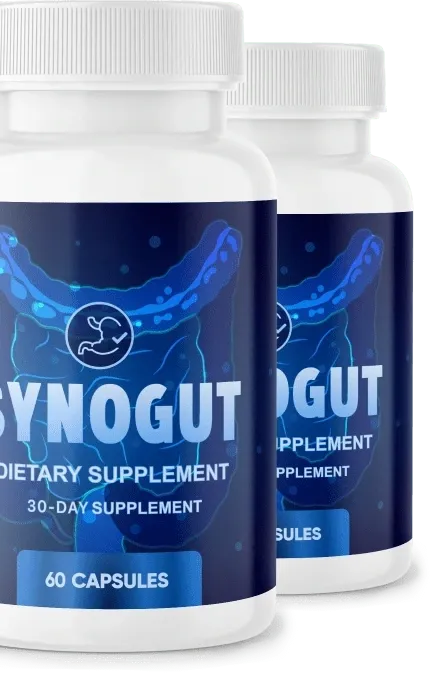
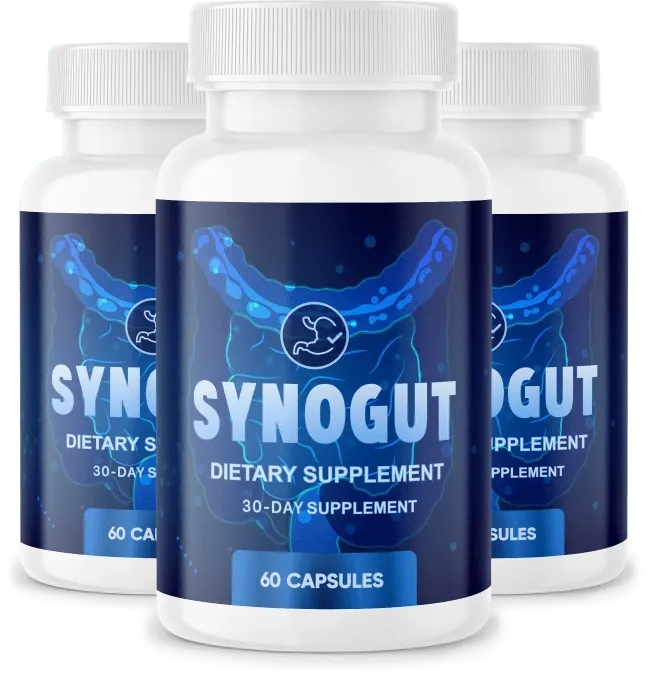
No. Nothing we hold shows a gluten-free claim for SynoGut. The bottle art has no seal, the seller pack makes no such statement, and no test result is published.
That matters because the phrase has a rule behind it. To carry the claim, a product must hold under 20 parts per million of gluten (McKinnon et al., 2022). A product with no claim has made no such promise.
So the careful reading is simple. Treat SynoGut as a product that may contain gluten. That is not an accusation. It is the safe default when a label says nothing and a named ingredient is a known risk.
| Fact | What is published |
|---|---|
| Bottle front | SYNOGUT, Dietary Supplement, 30-Day Supplement, 60 capsules |
| Ingredients on the bottle art | Psyllium, bentonite clay, black walnut, oat, flaxseed, prune |
| Ingredient amounts | Not published |
| Maker or distributor | Not named on the bottle images or the info site |
| Gluten-free claim | None shown |
| Allergen statement | Not shown in the material we have |
Why is the oat in SynoGut a gluten question?
Oat itself does not hold the type of gluten found in wheat, barley and rye. The problem is cross-contact. Oats are often grown, moved or milled near other grains, so they pick up gluten on the way (Celiac Disease Foundation).
For that reason, people with celiac disease are told to choose oats that are labeled gluten free. A plain oat ingredient with no label claim leaves the question open.
On the bottle art, oat is listed as Avena sativa, with oat fiber that carries beta-glucan. No amount is stated. The kind of oat, its source and any gluten testing are not published.
Can people with celiac disease take SynoGut?
We would not advise it without a doctor's say-so. Celiac disease is a medical condition, and a doctor who knows your history is the right person to weigh a product with an unlabeled oat.
If your doctor is open to it, take these steps first. They turn a vague worry into a plain answer from the seller.
- Step 1
Ask your doctor
Share the six ingredient names and say the oat is not labeled gluten free.
- Step 2
Call the desk
Phone +1 (302) 200-3480 and ask whether a gluten test result exists for your lot.
- Step 3
Ask about the oat
Ask whether the oat is certified gluten free and who made the capsules.
- Step 4
Wait for a written answer
If the desk cannot answer, treat the product as unsafe for you.
A clear no is a fine result. It saves you money and keeps your gut safe.
What about the other ingredients and the capsule shell?
The other ingredients are not published. That covers fillers, flow agents and the shell itself. A Supplement Facts panel would list them under other ingredients, and no panel has been supplied.
The same gap affects two more questions people ask. First, is SynoGut vegetarian? We cannot confirm it, because the shell material is not named. Second, does it hold other common allergens? The allergen statement is not shown in the material we have.
- Check the other ingredients line on your own bottle.
- Look for any allergen statement near the panel.
- Ask the desk about the shell if you avoid animal products.
Black walnut is on the label too. The sources we hold do not rate it for allergy, so we make no claim either way. If you have any nut allergy, show the label to your doctor before you begin.
Does the longer ingredient list change the gluten question?
It could, because two ingredient lists are in circulation. The bottle art shows six names, while the info site's text shows ten. Four names appear only there: aloe vera, apple pectin, glucomannan and L. acidophilus.
None of the four is described in our sources as a gluten source. But the point is not about them. The point is that nobody can tell you which list is current without a panel. The list on the bottle in your hand is the one that counts.
| Source | Names | What it lists |
|---|---|---|
| Bottle art and seller graphic | 6 | Psyllium, bentonite clay, black walnut, oat, flaxseed, prune |
| Info site text | 10 | The same six plus aloe vera, L. acidophilus, apple pectin and glucomannan |
How do you read a gluten claim on any supplement?
Look for the words, not the vibe. A bottle that says gluten free is making a claim you can hold the seller to. A bottle that says natural or clean is not.
- Find a printed gluten-free statement on the label, not only on a web page.
- Look for a certification mark if you need one.
- Read the other ingredients line for any grain you avoid.
- Ask the seller for a test result when a claim is missing.
The standard of under 20 parts per million is the number to remember. A claim that gives no standard, or a seller that cannot answer, is a reason to wait.
Are there other safety points to check besides gluten?
Yes, and they sit beside the gluten question. SynoGut has not been tested as a finished product, so its safety notes come from its ingredients one by one.
Psyllium swells with water, so each serving needs a full glass. People who have trouble swallowing or a narrowed bowel should not take fiber capsules (21 CFR 201.319). Clay and walnut tannins may bind medicines, so space your doses and ask a pharmacist.
No FDA approval stands behind SynoGut, and none exists for any supplement. The seller aims it at adults 18 and over. Pregnant or nursing women and anyone with a medical condition should ask a doctor first.
What should you know about price and returns if you decide to try it?
If your doctor is comfortable and the seller gives you clear answers, the commercial terms are short. Packs run $79, $69 or $49 a bottle on the sales page, and every pack carries a 60-day money-back guarantee.
| Fact | What is published |
|---|---|
| Packs and prices | 2 bottles at $79 each, 3 at $69 each, 6 at $49 each on the sales page. No 1-bottle pack |
| Guarantee | 60-day money-back. Claim by phone with your order ID. The buyer pays tracked return postage |
| Refund timing | 3-5 business days after the returns desk credits you, then 5-10 days on your card |
| Order desk | +1 (302) 200-3480 for orders, tracking and refunds |
Frequently asked questions
Short answers on gluten and SynoGut, from the bottle art, the seller pack and the Celiac Disease Foundation source named on this page.
Is SynoGut gluten free?
We cannot say so. It is not labeled or certified gluten free, oat is one of its named ingredients, and oats are easily cross-contaminated with gluten. No test result is published.
Can I take SynoGut if I have celiac disease?
Ask your doctor first. Without a gluten-free claim, treat the product as one that may contain gluten, and ask the order desk for a test result before you buy.
What does a gluten-free claim have to meet?
To carry a gluten-free claim, a product must hold under 20 parts per million of gluten. Neither a claim nor a test is shown for SynoGut.
Is SynoGut vegetarian or vegan?
We cannot confirm it. The capsule shell and the other ingredients are not published, so ask the order desk if you avoid animal products.
Does SynoGut list allergens?
No allergen statement appears in the material we hold. Check the label on the bottle you receive, and show it to your doctor if you have an allergy.
Who should ask a doctor before taking SynoGut?
Pregnant or nursing women, anyone with a medical condition and anyone on daily medicines. The seller pack aims the product at adults 18 and over.
Our view
The gluten question has a short answer and a careful one. The short answer is that no gluten-free claim is shown. The careful answer is to treat SynoGut as possibly containing gluten until the seller proves otherwise.
For most adults without celiac disease or a gluten allergy, this is a footnote. For anyone who needs a certified product, it is the main fact. Ask the desk for a test result and let your doctor decide.
SynoGut is not a treatment for any bowel disease, and it is not FDA approved. Your doctor knows your history; this page does not.
Last updated November 4, 2026.